
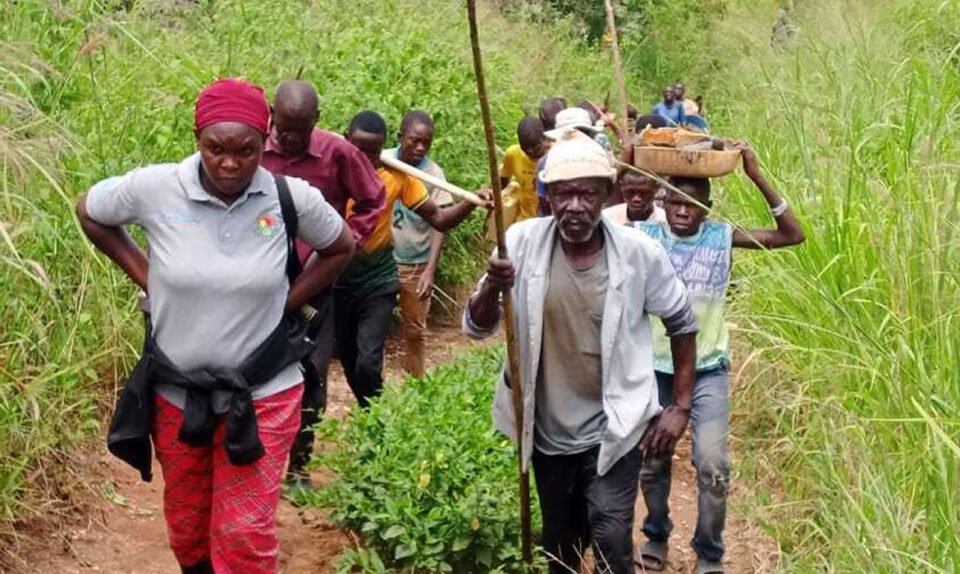
KUBI, NEBBI DISTRICT, UGANDA — What begins as a small seedling today could become a source of income, environmental protection and opportunity for future generations. In Kubi community, Erussi Sub-county, Nebbi District, a new tree-planting initiative is putting that possibility into action.
The Life Concern team recently joined the Kubi community to kick-start an initiative to plant 3,000 tree seedlings — 2,000 mahogany and 1,000 shea nut trees — under the organisation’s Climate Justice Programme.
But beyond the number of seedlings, the initiative raises a bigger question: how can communities turn tree planting into a lasting investment in their environment and livelihoods?
More Than Trees: An Investment in the Future
The partnership between Life Concern and the Kubi community highlights the important role local communities can play in responding to environmental challenges.
The initiative combines mahogany, valued for its timber, with shea nut trees, whose products can support livelihoods when the trees mature and are sustainably managed.
However, the benefits will depend on what happens after planting. Seedling survival, protection from fire and livestock, appropriate land management and long-term community involvement will all influence whether this investment delivers lasting results.
For Kubi, the real measure of success will not simply be how many seedlings go into the ground, but how many survive, mature and contribute to the community’s future.
Can Tree Planting Create Local Economic Opportunities?
Environmental conservation is often discussed in terms of protecting forests and restoring tree cover. Yet, for rural communities, it can also raise questions about household income, land use and opportunities for future generations.
Shea nut trees may offer potential for future income through nut collection and value addition, while sustainably managed mahogany trees may contribute long-term economic value. These outcomes are not immediate, and they depend on responsible management, suitable growing conditions and access to markets.
There is also an opportunity to involve young people and community groups in seedling care, monitoring and environmental education.
Such possibilities make community-led tree planting worth following not just as an environmental activity, but as a potential part of a broader local development story.
The Work Begins After Planting
For the Kubi initiative, the next stage is just as important as the launch.
Regular monitoring, replacement of seedlings that fail to establish, protection against fire and grazing, and clear community responsibilities can help improve survival rates.
Tracking progress over time could also help Life Concern and community members understand what is working, what challenges arise and what lessons other communities might apply to similar initiatives.
These are the details that can turn a one-day planting activity into a sustained community effort.
A Story Worth Following in West Nile
Through its partnership with the Kubi community, Life Concern is supporting an initiative that connects climate action with local participation and the possibility of long-term livelihood benefits.
For WooNam News, the story does not end with the planting of 3,000 seedlings. It continues as the trees grow, the community manages them and the potential benefits become clearer.
The question now is simple: how many of these 3,000 seedlings will survive to become part of Kubi’s environmental and economic future?
That is a story worth returning to.
WooNam News covers tourism, community initiatives and local developments shaping life and opportunity across West Nile.
