
By WooNam News
Mabamba, Uganda, Deep in the papyrus wetlands of Mabamba Bay, a remarkable bird can leave visitors standing silently in awe.
The Shoebill, with its enormous shoe-shaped bill, tall stature and almost motionless posture, is one of Uganda’s most distinctive wetland birds. But beyond its unusual appearance lies a much bigger story — one about wetlands, wildlife, tourism and the responsibility to protect fragile ecosystems.
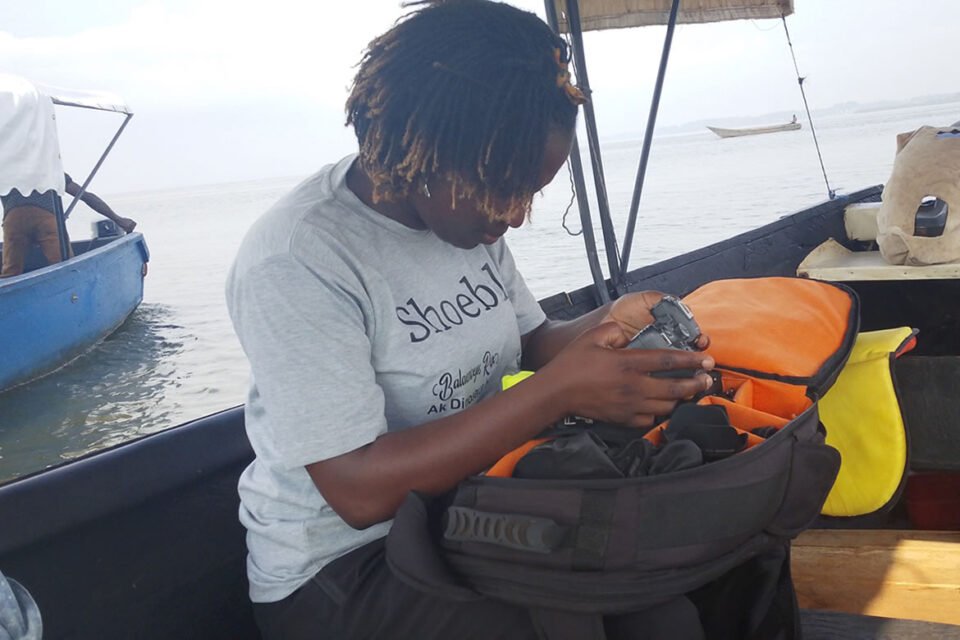
Recently, we visited Mabamba in search of the famous Shoebill.
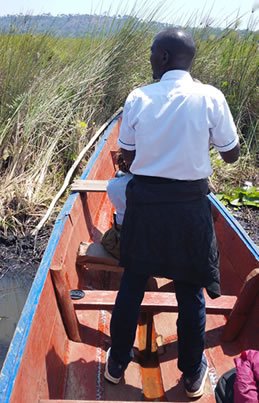
The journey involved moving slowly through the wetland and waiting patiently for an opportunity to observe the birds without disturbing them.
Eventually, the search paid off.
We encountered an adult Shoebill and, even more remarkably, a chick.
For hours, we hoped to witness the adult feeding the young bird. But wildlife does not always follow the schedule of human observers.
The feeding moment never came.
Instead, we witnessed something equally fascinating — the adult and chick together, communicating through the characteristic bill-clapping behaviour of Shoebills.
It was a reminder that wildlife encounters are not performances.
Sometimes, the most meaningful experience is simply being present.
 Why Mabamba matters
 Why Mabamba matters
- The Shoebill’s presence in Mabamba is closely connected to the health of the wetland itself.
- Mabamba Bay is an important wetland ecosystem supporting numerous bird species and providing resources and livelihoods for communities around the area.
- For conservationists and birdwatchers, the Shoebill has become one of Mabamba’s most important attractions.
- But its survival cannot be separated from the survival of its habitat.
- Wetland degradation, habitat disturbance and other pressures can affect the ecosystems on which birds and communities depend.
- This means that protecting the Shoebill is not simply about protecting one unusual bird.
- It is about protecting the wetland that supports it.
Conservation and tourism can work together
Mabamba also demonstrates the potential relationship between conservation and responsible tourism.
Visitors come to experience the Shoebill and the wider wetland environment. Local guides and communities can benefit from this tourism while also becoming important partners in protecting the ecosystem.
Responsible tourism can therefore give people another reason to value the wetland — not only as a source of natural resources, but also as a place of ecological importance and tourism potential.
But tourism must be conducted responsibly.
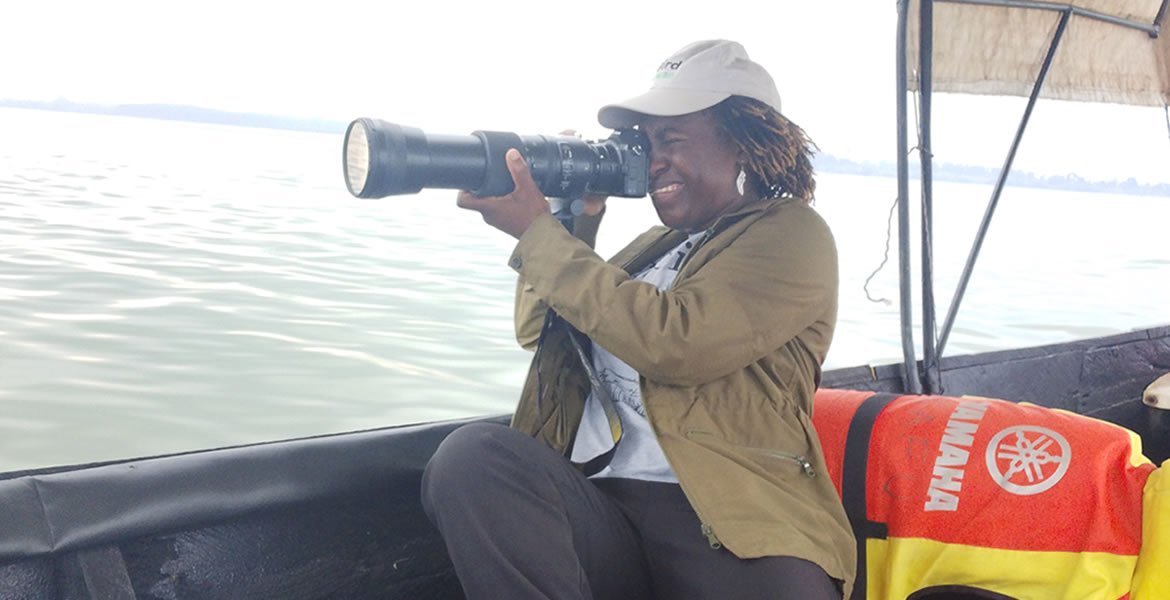
Visitors should avoid disturbing nesting birds, follow the guidance of local guides, keep a respectful distance from wildlife and avoid activities that damage the wetland.
The bird that makes people stop and look
There is something about the Shoebill that makes people pause.
Perhaps it is the enormous bill.
Perhaps it is the bird’s unusual appearance.
Or perhaps it is the way it can stand almost completely still, watching the waters of the wetland.
But once you see one in its natural environment, the experience becomes more than simply ticking an animal off a travel list.
 You begin to understand that the Shoebill is part of a much larger ecosystem.
- The papyrus.
- The water.
- The fish.
- The other birds.
- The local communities.
- The guides.
- And the visitors who come hoping to see one of Africa’s most extraordinary birds.
All are connected.
A question for the future
The Shoebill is still here.
Its chicks are still being raised in wetlands such as Mabamba.
People are still travelling to see it.
But the question is whether future generations will have the same opportunity.
Protecting Mabamba today can help ensure that the answer remains yes.
The next time you see a photograph of a Shoebill from Mabamba, remember that you are not just looking at a rare and fascinating bird.
You are looking at a creature whose survival is tied to the survival of a wetland.
Protect the wetland. Protect the Shoebill.
Want to See the Shoebill at Mabamba?
Contact WooNam Safaris to plan your Mabamba Shoebill experience.
WooNam News — telling stories that connect people, places and possibilities.
